Temporary Fence Panels: Sizes, Stands, Clamps and Wind
Updated · By the Cone to Curb editors
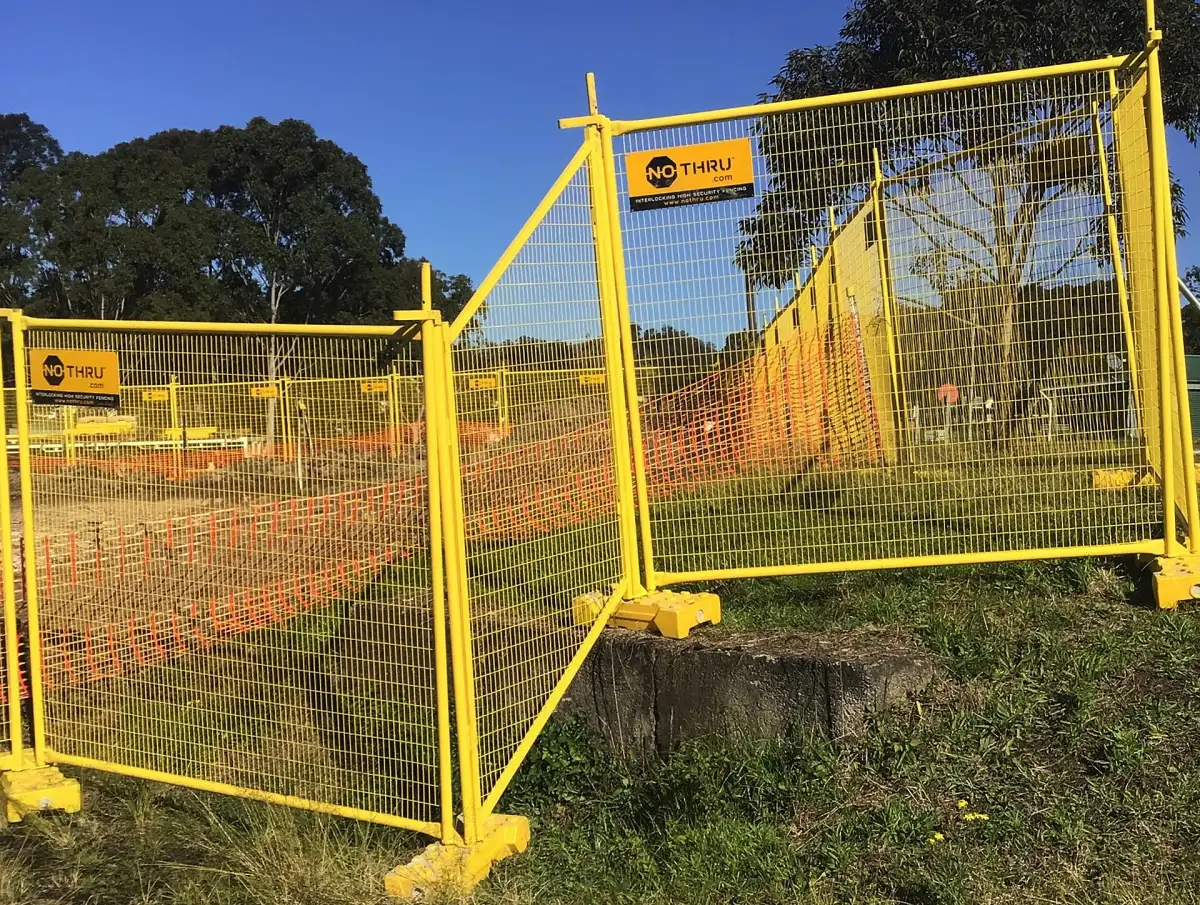
Temporary fence panels are free-standing welded wire or chain link panels, usually 6 feet tall and 10 or 12 feet long, that stand in weighted feet and clip together at the top. For a straight run you need one more stand than panels and one clamp per joint (two on many systems), plus braces and sandbags if you hang a screen or banner.

| Panel | Typical size | Typical weight | Best for |
|---|---|---|---|
| Welded wire, galvanized | 6 x 10 or 6 x 12 ft | About 40 to 60 lb | Construction perimeters, the U.S. standard |
| Chain link panel | 6 x 10 or 6 x 12 ft | About 40 to 70 lb | Rental fleets, rough sites |
| Anti-climb (tight mesh) | 6.5 x 11.5 ft and similar | About 50 to 80 lb | Events, security perimeters |
| Plastic barricade fence panel | 3 to 4 ft tall, 6 to 7 ft long | 10 to 25 lb | Short pedestrian separation, not security |
Weights vary with tube and wire size. Check the spec before you plan a truckload.
Stands, clamps and braces
- Stands (feet). Concrete, rubber or plastic blocks with two holes for the panel legs. Rubber and plastic feet are lighter to move; concrete feet resist wind better.
- Clamps. One clamp at the top of each joint is the minimum. Many rental companies add a second at the bottom so panels can't be lifted apart.
- Braces. An angled brace pinned to a stand or the ground every few panels. Any fence carrying a screen or banner needs them.
- Sandbags. On the stands, never on the panels.
Screens and wind
A bare mesh panel lets most wind through. Add privacy screen or a printed banner and the fence becomes a sail. Screens with vent cuts or open mesh fabric help, but the bigger fix is bracing and ballast at every few panels. On exposed sites, plan to take screens down before a storm.
When the fence routes pedestrians
If the fence moves people off a sidewalk or along a detour, it's working as a pedestrian channelizing device, and Section 6K.02 of the MUTCD sets rules for those:
- A continuous detection plate: bottom no higher than 2 inches above the walkway, top at least 8 inches up, so someone using a cane finds it.
- A continuous hand-trailing edge 32 to 38 inches above the walkway.
- Gaps between connected devices no wider than 1 inch.
Standard fence panels on feet don't have a detection plate or a trailing edge. Where the fence lines a pedestrian route, add a pedestrian channelizing device along it, or use a barrier system made for that purpose. Keep the walkway at least 60 inches wide, or add a 60 x 60 inch passing space every 200 feet (6K.07).
Many cities also adopt the International Building Code chapter on safeguards during construction, which can require a covered walkway or an 8-foot barrier next to the work. Your permit will say.
Temporary fence panel calculator
- Panels
- 25
- Stands
- 26
- Clamps
- 24
Add a gate panel for each opening, and a brace or sandbag for every few panels if the fence carries a screen or banner, which catches wind.
Mistakes we see
- Counting panels but not stands. An open run needs one more stand than panels.
- Screens without braces. The first windy afternoon puts the fence on the sidewalk.
- Gaps at corners. Panels don't meet at 90 degrees on their own; use a corner clamp or an extra stand.
- Fence across a fire lane or hydrant. Ask the fire department before you fence a site that blocks access.
What it costs
Ballpark U.S. prices in late 2026: $90 to $200 per 6 x 12 welded wire panel, $15 to $40 per stand, $3 to $10 per clamp, and $40 to $120 per brace. Renting is often a per-foot price for the job, delivered and installed.
Where to buy or rent
Fence rental companies, fence suppliers and equipment rental chains. Ask whether the price includes stands, clamps and delivery, and whether the rental company inspects and fixes the fence during the job.
Sources
Related guides
- Water Filled Barriers with Fence: When to Use Them, What to Check
- Crowd Control Barriers: Steel vs Plastic, Sizes and How Many
- Roll Up Traffic Signs: Sizes, Sheeting, Stands and Spacing
- Roll Up STOP/SLOW Paddles: Size, Staff and Flashing Light Rules
- Delineator Posts: MUTCD Heights, Bands, Spacing and Bases